If you’re booking Phantom of the Opera at the Hollywood Pantages this summer and wondering whether it’s “the real one” or some stripped-down remake, here’s the short answer: it’s neither the 1988 staging you might remember, and it’s not the stark redesigned version that toured North America through the 2010s. It’s a third thing, and honestly it’s the most interesting Phantom story in years. Los Angeles is one of the early stops on this tour, with the run at the Pantages from June 24 to August 9, 2026, so a lot of people are about to ask the same question. Let me clear it up.
The short version
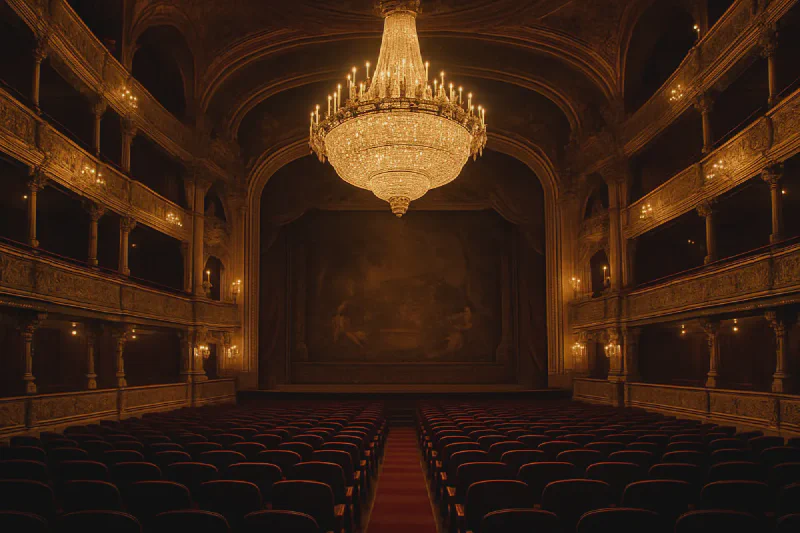
There have been three Phantoms touring the country over the decades, and people mix them up constantly. The one coming to the Pantages in 2026 brings back Maria Björnson’s lush original look, the gilded Paris Opera House and the chandelier that rises over the room, after a decade of a much plainer redesign. The trade-off is a smaller orchestra. So if you saw the touring Phantom around 2015 and felt like something was off, the 2026 version is closer to the grand original you pictured, not further from it.
Three different Phantoms, sorted out
This is where the confusion comes from. Andrew Lloyd Webber’s Phantom has had a long life, and what you saw depends a lot on when you saw it.
- The original (1986 to about 2020). Hal Prince directed, Maria Björnson designed, Gillian Lynne did the choreography. This is the version with the painted opera house, the sculpted figures framing the stage, the grand staircase for “Masquerade,” and the chandelier that floats up over the audience during the overture and crashes down to end Act 1. It ran on Broadway for 35 years and toured for decades.
- The “spectacular new production” (2010s tour). Around 2013 Cameron Mackintosh sent out a redesigned staging directed by Laurence Connor, with a new set by Paul Brown built around a big rotating cylinder instead of Björnson’s painted world. The chandelier behaved differently and didn’t rise over the house the way the original did. It was a perfectly good night of theatre, but purists felt it lost the opera-house grandeur. This is the one most North American cities saw in the 2010s.
- The 2026 tour (what you’ll see at the Pantages). This is the production that reopened London’s His Majesty’s Theatre in 2021 and launched a new North American tour in November 2025. It goes back to Björnson’s original designs, adapted for touring by Matt Kinley, and is built on Hal Prince’s original direction (staged for this tour by Seth Sklar-Heyn). The grandeur is back. The orchestra is smaller.
So “is the new one different from the original?” has two answers depending on which “new one” someone means. Compared to the 1988 original, the 2026 tour is very close in look and feel. Compared to the redesigned 2010s tour, it’s a big swing back toward the classic.
What changed, side by side
Here’s the part a chatbot will get wrong, because most of the information floating around online still describes the 2010s redesign. This is the actual lineup as of the 2026 tour.
| Element | Original (Prince / Björnson) | 2010s “new production” tour | The 2026 tour at the Pantages |
|---|---|---|---|
| The set | Painted Paris Opera House, sculpted figures, grand staircase | Big rotating cylinder, stripped-back look | Björnson’s original look, back (adapted by Matt Kinley) |
| The chandelier | Rises over the house, crashes to end Act 1 | Redesigned, didn’t rise over the room the same way | Rises again, and it’s bigger and faster than the 2010s version |
| The orchestra | Full pit, around 27 players | Reduced for touring | Reduced, reported around 14 players |
| Direction | Hal Prince | Laurence Connor (new staging) | Hal Prince’s original direction, restaged by Seth Sklar-Heyn |
| The overall feel | Grand, operatic, old-world | Sleeker, more modern, less ornate | Grand and old-world again, on a touring scale |
What came back (the good news)
The headline is the look. Björnson’s design is the reason Phantom feels like Phantom, and the 2026 tour puts it back front and center. The proscenium with its sculpted figures, the candlelit lair, the staircase drowning in gold for “Masquerade,” it all reads as the show people fell in love with. Reviewers on this tour have singled out the return of those original sets and costumes as the production’s biggest win.
The chandelier is the other big one. It rises up over the audience during the overture again, the way the original did, and by most accounts it’s larger and drops faster than the 2010s version managed. For a lot of the room, that one effect is the whole reason to splurge on a good seat. (If you’re choosing where to sit around that moment, our best seats for Phantom guide breaks down which rows actually catch it.)

If you saw the touring Phantom in the 2010s and felt it had lost something, the 2026 version is the one that gives it back.
The honest catch: a smaller orchestra
I’m not going to sell you a perfect restoration, because it isn’t one. The clearest compromise is the pit. The original Phantom carried a large orchestra, around 27 players. This staging runs a reduced orchestration, widely reported at about 14. On the biggest, most sweeping numbers, sharp-eared fans can hear the difference, less of that wall of live sound that made the score feel enormous.
For most people it won’t ruin anything. The singing on this tour has earned strong notices, and the songs still land. But if a giant live orchestra is the specific thing you love about Phantom, go in knowing the sound is leaner than 1988. It’s the one place where “back to the original” has an asterisk.
So is the new one better?
For most ticket-buyers, yes, this is the version to be excited about. It looks like the Phantom you have in your head, the chandelier moment is back and bigger, and the staging carries the old-world weight the 2010s redesign traded away. As a night out, it’s a grand, romantic, full-scale spectacle, which is exactly what people want from this title.
The people who might quibble are the die-hards who memorized the original cast recording and will notice the thinner orchestra, and anyone who actually preferred the sleeker 2010s look (a smaller group, but they exist). For everyone else, especially first-timers and lapsed fans who haven’t seen it in years, this is a great time to go.
For the full rundown on the performances, runtime, and age guidance, our honest Phantom review covers whether it’s worth the ticket for your group.
How to do your Phantom night right
Once you know which production you’re seeing, the rest is logistics:
- Where to sit: the chandelier and the full-stage spectacle reward a smart seat. See the best seats for Phantom at the Pantages, tuned to this staging.
- Don’t overpay: the Pantages lottery and rush can land you a real seat for a fraction of face value. Start with our cheap LA theatre tickets guide and the lottery and rush cheat sheet.
- Getting there: sort the car situation early with parking near the Pantages, including how to beat the post-show crawl on Hollywood Boulevard.
- Make a night of it: where to eat before a Pantages show, and see what else is on in LA theatre while you plan.
Frequently asked questions
Is the 2026 Phantom of the Opera the same as the original? It’s very close to the original in look and feel. The 2026 tour uses Maria Björnson’s original set and costume designs (adapted for touring by Matt Kinley) and Hal Prince’s original direction, restaged by Seth Sklar-Heyn. The main difference from 1988 is a reduced orchestra. It is not the stark redesigned “new production” that toured in the 2010s.
How is the new Phantom different from the version that toured a decade ago? The 2010s tour was Cameron Mackintosh’s “spectacular new production,” a redesign with a big rotating set and a different chandelier. The 2026 tour drops that redesign and brings back Björnson’s original opera-house look, with a chandelier that rises over the audience again and falls bigger and faster. The grandeur the 2010s version traded away is back.
Does the chandelier still fall in this production? Yes. The chandelier rises up over the house during the overture and drops to end Act 1, as in the original, and on this tour it’s larger and faster than the 2010s staging. Where you sit affects how much of that moment you catch.
Is the orchestra smaller in the new Phantom? Yes. This staging uses a reduced orchestration, widely reported at around 14 players where the original pit held roughly 27. Most audiences won’t mind, but fans who love Phantom for its huge live sound may notice it on the biggest numbers.
Is it worth seeing the 2026 Phantom? For most people, yes, especially first-timers or anyone who hasn’t seen it in years. It looks like the classic Phantom, the chandelier effect is back and bigger, and the touring cast has earned strong reviews. See our full review for the details on runtime, age guidance, and who should skip it.